


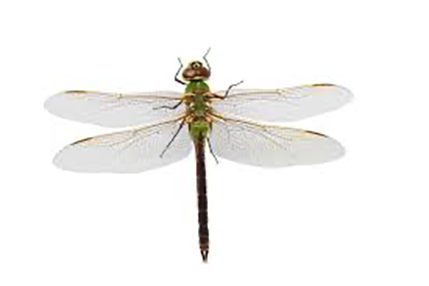
The dragonfly’s life-cycle revolves around water, so it’s no surprise that Florida has more than 150 species. They come in many colors – black, blue, green and red being most common. Dragonflies don’t have a stinger, so they won’t sting you. They do, however, have teeth. So, a bite is possible. Dragonflies aren’t an aggressive insect, but they can bite out of self-defense when they feel threatened.
Dragonflies are most numerous during the summer. However, certain species come out earlier. Some can be seen only in the spring. Their flight seasons starts in late April or early May, and finishes by mid-June. Most lay their eggs in mud or water. Nymphs hatch within a few weeks, and then live in water for up to two years, therefore, dragonflies are especially numerous near bodies of water. Thanks to our warm and humid climate, many species in Florida are here year-round. Dragonflies live two years as nymphs, and three to six months as adults.
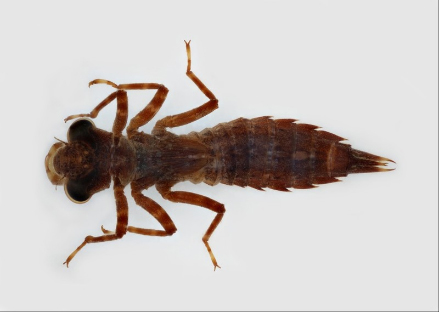
After months, or even years in the water, dragonflies transform into one of the fastest and most agile flying insects. Their four broad wings combine with large, discriminating eyes to create an efficient visual predator. Because they hunt by sight, dragonflies are most active, and most often seen on sunny days. They will usually be found around ponds, streams, drainage ditches or other wet or marshy areas.
You see more dragonfly activity during midafternoons because they are most active during the warmest part of the day. In the morning, dragonflies can often be found perched on reeds and grass stalks at the water’s edge.
Dragonflies are natural predators of mosquitoes. In fact, they eat them at all stages of life. An individual dragonfly can eat hundreds of mosquitoes each day. Regardless of species, all dragonflies are voracious insect predators. Many can be seen scouting over ponds or parking lots, feasting on midges and mosquitoes. Others perch on branches or reeds, waiting to ambush the next fly to pass by.
When we see what seems like swarms of dragonflies, we’re often told that they are purposely dropped by helicopter to control the mosquitoes. The rumor undoubtedly is continued because it’s a fairly common sight to see swarms of dragonflies zipping, darting and hovering throughout the area. Dragonflies are commonly called ‘mosquito hawks’ and actually are voracious predators of the pesky bugs. But, according to spokesmen for local mosquito control, dropping them by helicopter isn’t practical, too difficult, and just isn’t done. This is what we call our own little urban myth. The biggest reason we have a large number of dragonflies in our area is mostly due to water proximity.
Next time you see one zip across your yard, consider saying thanks to the dragonfly for helping to control the pest population.