


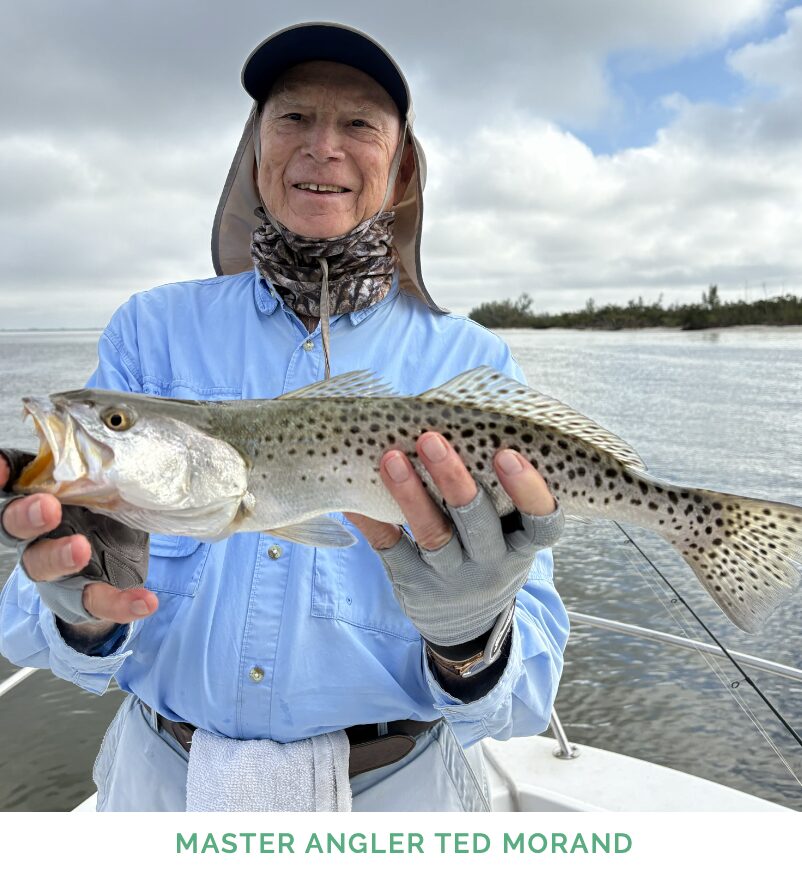
Like many wintertime Florida residents, my early years of fishing were spent trailering fishing boats around the Great Lakes in pursuit of salmon, walleye, bass, and perch – with great success, I might add, bringing countless hours of enjoyment over the last 60 years or so. Well, then, what could be so different about fishing the saltwater flats of Charlotte Harbor? Hah! Let me count the ways I have chased after snook, redfish, spotted trout and tarpon. The most productive have been with our excellent professional fishing guides serving our area. But the most memorable times have been those fishing with good buddies and exploring these unknown waters in our own boats. I am sure everybody has some experiences that come to mind. Here are a few of mine.
SANDBARS AND OYSTER BEDS
“Just pilot your boat at least a mile offshore and you will never hit a sandbar,” said the experienced guide on my first trip on this estuary. Yeah, right. You won’t catch any fish either, because most of them are concentrated off the sandbars, oyster beds and mangrove tangles. So that’s where you fish. Anglers are most vulnerable to being stuck on cloudy days when the shallow water is not as obvious. Being stuck on a sandbar is not just likely – it is inevitable. After a couple such experiences you learn to carry some wading shoes and to empty your pockets and remove your cell phone before jumping in to push off. Later you become even smarter. For instance, the rule aboard my boat was that the youngest guy on board had the task of jumping in and pushing us out to deeper water. I just made sure I was never the youngest on board!
GASSING UP THE BOAT
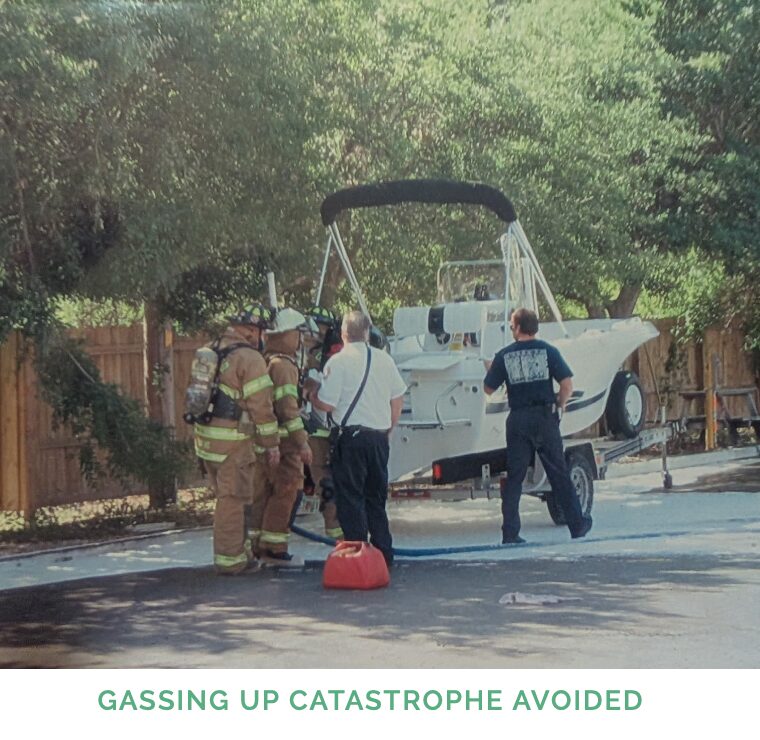
The place is the Shell station gas pumps in Matlacha, with our trailered boat pulled in for a fill-up before venturing forth for a day of fishing the saltwater flats. We need about 20 gallons of gas that lifelong buddy, Tony would pump into the boat gas tank while I remove the cowl from the outboard engine, and fill the oil reservoir. “Sounds like it’s getting close to full,” says Tony as he hears the telltale gurgle. But, a glance his way strikes fear into my heart as I see he has just pumped 20 gallons of gasoline down a gunwale rod holder, and into the open bilge of our boat! He mistakes the rubber flap of the rod holder for the gas filler cap. Holy cow! The automatic bilge pump will trigger at any moment, and spew raw gasoline out onto the gas pump area, and there would be a fiery explosion, killing everyone at the stop. But luck – or the hand of God – is with us that day. Somehow, we manage to start the truck engine, nurse the boat trailer rig forward and away from the pumps, remove the boat bilge drain plug and begin filling 5-gallon pails with the misdirected gas. But the station attendant has observed our struggle, and has the presence of mind to call for emergency service. Within a few minutes a county fire truck is on the scene, accompanied by the HazMat truck and crew and two squad cars, pushing us aside and taking over. An hour later we are back on the road, now with a bilge full of foamy flame suppressor and a greatly increased awareness.
STRUGGLES WITH THE ANCHOR
Fishing friend, Dave and I have motored back to the mangrove shallows, and quietly crept upwind with the electric trolling motor. We are getting ready to anchor up and let the boat settle back within casting distance of a known hotspot for snook. “I’ll drop the anchor,” says Dave as the boat slowly swings into position. After a few quiet minutes of drifting back I ask Dave why the boat anchor doesn’t seem to be holding. Whoops, he neglected to tie the anchor line to a cleat. Scratch one anchor and 50 feet of line. The next day the embarrassed Dave presents me with a replacement anchor and line.
You would think one experience like this would help with learning, but it didn’t. A couple of years later we move the boat into position to fish for sheepshead off the phosphate docks near Boca Grande. This time I handle the anchor as well as the boat motor as we maneuver into position. Uh-oh, I have neglected to cleat the anchor line. Goodbye boat anchor and line! Second offense. This time it was my fault.
As if this wasn’t enough, last season good friend Peter was the skipper in his boat, motoring over to the shallows off the beach at Boca Grande. As he swings the boat into the wind, good friend Arnie is in charge of the anchor. Yep, you guessed it. He doesn’t realize the anchor line is not attached to the bow ring, and the boat drifts away from a 20-pound anchor, chain and 100 feet of line. But here’s where quick thinking and experience can pay off. Peter immediately saves the GPS coordinates and, on the trip home, devises a recovery plan. Two days later this thrifty and resourceful Nova Scotian returns with determination, and a homemade grappling hook and, with the help of friend, John, successfully recovers his lost equipment.
DEAD BATTERY RESCUES
Tony and I are fishing again, this time off the sand bars at Two-Pine. It is time to call it a day and head back to Burnt Store Marina. Oh, no! The cranking battery is depleted and the boat motor won’t start. We are dead in the water. We are facing a tow back over five miles of open water, if we can even find a tow boat or willing fishing boat. But look, here comes someone to save the day! Another fisherman, and he has jumper cables. Lucky for us, after a quick hook-up and re-start we are on our way back to the marina.
You would think this would teach us a lesson, but there we are a month later, same spot, same dead battery. This time one of the local fishing guides, Scott Hughes, sees our plight and ventures near to offer help. No, he doesn’t have jumper cables, but he has something better. He loans us a spare battery from his emergency stash, we wire it up to the outboard battery cables, and the day is saved. We motor back to the marina and return the borrowed battery, grateful to Scott and his timely rescue. And more aware of the need to know your equipment.
SINK OR SWIM
It was Peter’s 21-foot boat and his friend, John and John’s son, Sean, and grandson, Carter, are fishing off the Bokeelia sandbars and catching a few spotted trout and ladyfish. The day is dragging and the fishing is slow. Carter, fishing up in the bow of the boat asks why the bow of the boat seems to be sitting rather low in the water. The guys lift a couple of hatch covers and nearly panic when they see that both boat batteries are nearly covered with sea water! A quick check of plugs and drains reveals that one of the forward storage well drain lines has rotted away and seawater is backing into the boat bilge. It is way more water than the bilge pump can handle so the worried boaters are faced with a major decision: run the boat up onto a sandbar to fix the leak then call for a tow off the bar, or chance it and try to run back over open water and hope that the six miles could be crossed before the incoming water sinks the boat.
Peter makes the call. He has been in tough spots before. He points the boat east toward Burnt Store Marina, orders all hands to the rear of the boat so as to lift the bow and reduce the inflow, while John and Sean bail furiously with buckets dipped into the rear hatches. They arrive back at the boat launch, still afloat and rather exhausted, but grateful for surviving a close one.
Surely the Lord protects fools, especially the ones with fishing poles and high hopes who travel down from the North.