


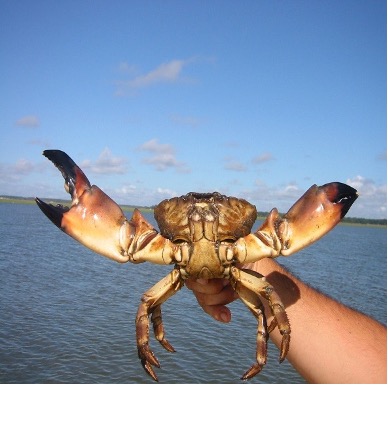
The onset of autumn in Florida not only brings wonderfully mild sunny weather but also the annual harvest of stone crab claws, beginning October 15, and continuing through May 15.
The wonderful thing about the harvesting stone crabs is that the source renews itself. A stone crab can re-grow a claw in about a year, or one molting period. But to re-grow a claw to legal size, it takes three years (or three molting periods). Younger crabs can grow claws faster; older crabs may never re-grow their claws. The stone crab’s large claws can account for half its body weight. Only the claws of stone crabs are harvested. The crab is put back in the Gulf of Mexico alive, where it regenerates a new claw.
The main method used in both commercial and recreational stone crab fishing is baited traps. Some recreational crabbers collect claws by hand – using scuba or snorkel gear. Recreational stone crabbers are limited to five traps per person, and are required to have a saltwater fishing license. Any females bearing eggs must be returned to the water, unharmed. Stone crab claws must be steamed immediately upon being brought to the dock and then chilled.
Florida law prohibits harming the body or legs of stone crabs. Only one claw may be taken from the crab. Claws must be a at least 2¾ inches, measured from the tips of the immovable finger to the first joint. The daily limit is 1 gallon of claws per person or 2 gallons per vessel, whichever amount is less.
Stone crabs are not cheap; expect to pay anywhere from $25 – $100 for a stone crab meal, depending on the previous year’s harvest, amount purchased, and market prices. Claws are sold in fish markets based on size, and price per pound varies accordingly.