

If you came to live in Burnt Store Marina from points north, like most of us did, you probably think that if it’s called a “tropical plant,” you can plant it in your yard, or put it on your porch. If you Google “tropical plant,” you will most likely come up with gobs of photos of houseplants that, up north, can only grow inside where air is temperature and controlled.
Now, after the Storm, many of us need to replace some or all of our landscaping. When you select a plant for your yard, you need to keep several factors in mind. You can’t plant a shade lover in the sun, or a sun lover in the shade. You need to be aware of how much water the plant needs and can tolerate. And, you need to know how much heat or cold that it can bear and to thrive in.
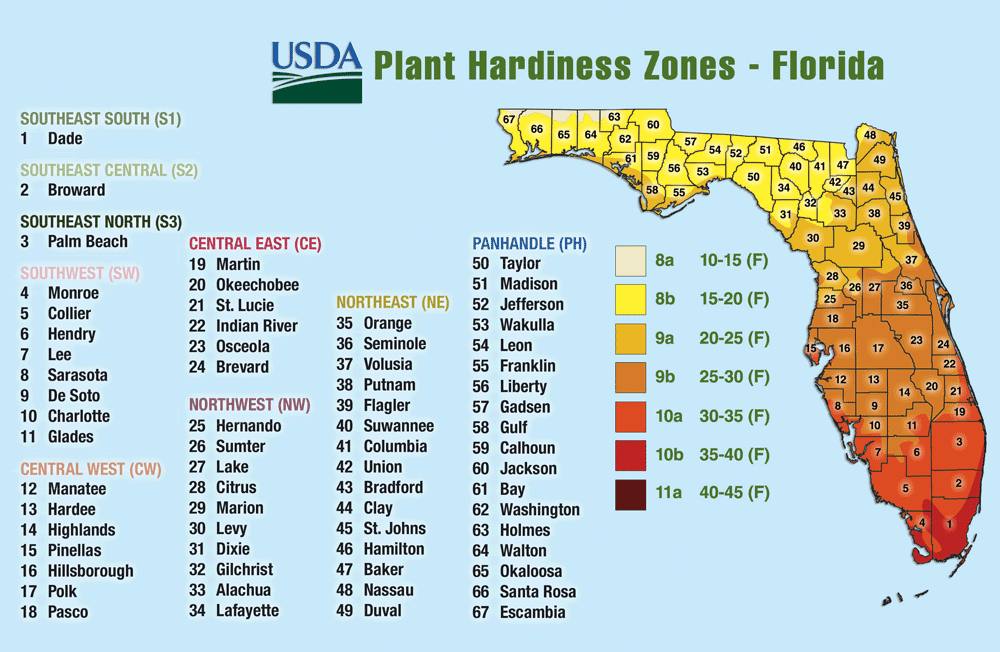
This takes us to Plant Hardiness Zones. The USDA (United States Department of Agriculture) has created numbered zones to guide gardeners and growers how to determine which plants are most likely to thrive at a location. The Plant Hardiness Zones map divisions are based on the average annual minimum winter temperature, and is divided into zones for each 10-degree Fahrenheit difference. There are 13 zones from Alaska in the north to Puerto Rico in the south. Florida has 4 zones (8,9,10 and 11), which have been divided again by a 5-degree difference into “a” and “b.”
And yes, our hardiness zones 8, 9, and 10 are considered the best for gardening due to several factors. First, these zones have a long growing season of at least 9 months from March to November. And second, winter low temperatures tend to be the mildest.
So, when researching the plants you may want in your landscaping, be sure to check for their hardiness zone number. And remember that plants that may thrive in zone 5 may not do well in our designated zones – 9b and 10a.