


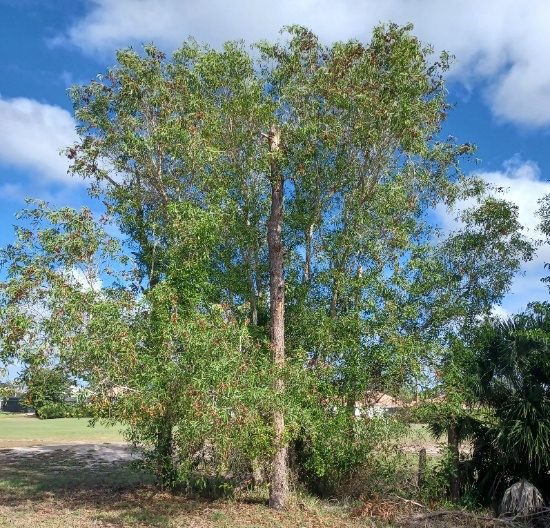
I’ve written before in The Beacon about various invasive species within our community (e.g. Florida Pursley; Tree Frogs and the Brown Anole, all blamed on Cuba). This month I direct our attention to an invader from Australia and other parts of southeast Asia. Earleaf Acacia, not to be confused with the beneficial native Sweet Acacia, is a tree which is taking over several areas along our local ponds and waterways. It spreads very aggressively and can crowd out other more beneficial species, and reduce habitat for wildlife. A significant problem with this tree is that it has very brittle branches which often break when storms blow through. It can produce tens of thousands of seeds helping it propagate, and has been designated as a Category I, exotic-invasive species by the Florida Exotic Pest Plant Council.
MATURE EARLEAF ACACIA ON SOUTH SIDE OF PELICAN 8 (ON BSMCC AND PGI 22 PROPERTY)
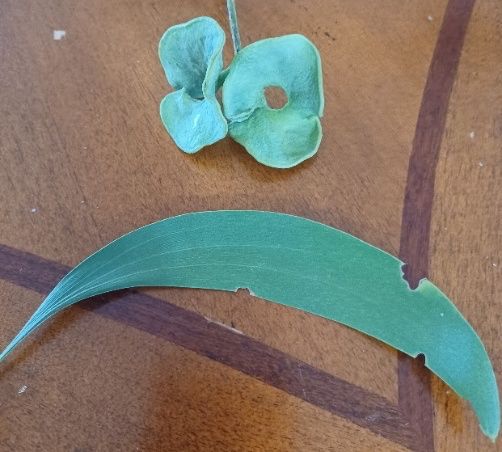
The Earleaf Acacia can be easily identified by its leathery seed pods, which look a little like an ear. They start green then turn brown. The long slender sickle shaped leaf-like appendages are actually not leaves but rather phyllodes (widened leaf stocks). They start green then turn yellow. This tree also produces yellow bottle brush-like flowers, which bloom in the fall. One of its few redeeming qualities is that it produces good firewood and charcoal.
SAMPLE OF EARLEAF ACACIA SEED POD AND LEAF
Eradication can be difficult and requires immediate treatment of the cut trunk with an herbicide containing Glyphosate, applied with a paint brush to the cambium layer, just inside the bark. I’ve been following this recommended procedure on my property.
Editor’s note: There are several additional very invasive tree species in the Burnt Store area, which include melaleuca (melaleuca quinquenervia), Brazilian pepper (schinus terebinthifolia), and Australian pine (casuarina equisetifolia). These trees, as well as the earleaf acacia, should be removed from your property, as soon as possible.